
Acontecer
How DPs over ‘Joker,’ ‘1917’ or More Took over Weather in accordance with Capture Perfect Shot: «It’s Stressful, But Thrilling»
With each film offering up its own particular challenges, from high tides to a 73-foot telescopic crane for a single shot, the five Oscar-nominated cinematographers share their most difficult moments to capture onscreen.
-
In Martin Scorsese’s lengthy crime epic with the many technical feats, the director still managed to surprise cinematographer Rodrigo Prieto. The challenging scene he didn’t anticipate: a quick shot of Frank Sheeran (Robert De Niro) helping Jimmy Hoffa’s (Al Pacino) Teamsters push some taxis into the Chicago River. Scorsese’s vision for the scene required operating the camera from a crane that could fly over the action. «This was a big challenge, because [after] take one, now the taxis are in the water,» says Prieto. «What if something went wrong and now you have to do another take?» Turns out, the answer was they’d have to wait three hours while a crane on a barge reset each car before going again. «So really, we had one shot at it,» he says. Which is why, when the first taxi got stuck and barely made it into the water before the camera passed, Prieto kept going. «The camera move ended up being slower than Scorsese expected, but the struggle made it realistic,» he says.
-
-
Quentin Tarantino’s love letter to Hollywood is full of thrilling sequences, but none of those are the scenes that kept cinematographer Robert Richardson up at night. Instead, his most challenging scene featured a tricky camera move that started with Rick Dalton in the pool rehearsing his lines and flew back over the house to capture Roman Polanski and Sharon Tate racing off to the Playboy Mansion. «I had nightmares about this shot for weeks, never actually believing we could accomplish it,» says Richardson. This speedy shot is not a handoff to visual effects, but one single camera move that was accomplished after scouring every option — a 73-foot telescopic crane that could move the camera to every position it needed to be in, from closely settling in on Dalton to whisking over homes. Says Richardson, «I am proud of what we did as a team and believe it adds to the vocabulary of Once Upon a Time in Hollywood.»
-
Joker cinematographer Lawrence Sher’s greatest challenge in filming Todd Phillips’ dramatic thriller was chasing magic hour, the window of time with golden light between when the sun has dropped below the horizon and true night. «The juxtaposition of color that happens [at that time of day] is beautiful and ethereal,» says Sher. With such a short amount of time to get the shots accomplished, Sher says rehearsals earlier in the day ran «like a military operation» to make sure everyone had their duties down pat. «Any hiccups or mistakes, and it’s over,» he says. «The time has passed and the door is closed. It’s stressful but thrilling, and when it works, it’s worth it. As they say: No risk, no reward.»
-
The Lighthouse cinematographer Jarin Blaschke didn’t just face technical challenges with a tricky scene in which a pursued Robert Pattinson launches a boat during a brutal storm. «The scene could only be shot with a particular alignment: high tide for a water source to create crashing waves, dusk for proper exposure ratios and an overcast day,» Blaschke says. But even when the scene’s environmental needs aligned, the equipment just wouldn’t cooperate. High artificial winds and a faulty rain deflector made the camera difficult to operate, forcing the crew to retry the scene several times across three different days. Says Blaschke, «We lost our dusk-tide-overcast window a few times, and it took ages to accomplish this scene.»
-
When shooting a film that’s meant to look like one continuous shot, every scene is equally difficult, says 1917 cinematographer Roger Deakins. From camera movements to lighting to choreography, each component of the film had to come together seamlessly to create the whole. «I can honestly say, every section was difficult,» Deakins tells THR. Since the film takes place on the battlefield, one of the most important aspects of filming was something that production couldn’t control, no matter how much they wished they could: the weather. «The film was shot in the U.K. after all!» he jokes.
Putlockers-[Episode-IX HD ]-Watch! Star Wars: The Rise of Skywalker [2019] Online Full For Free
-
-

Acontecer
Falleció Cuauhtémoc Cárdenas a los 92 años
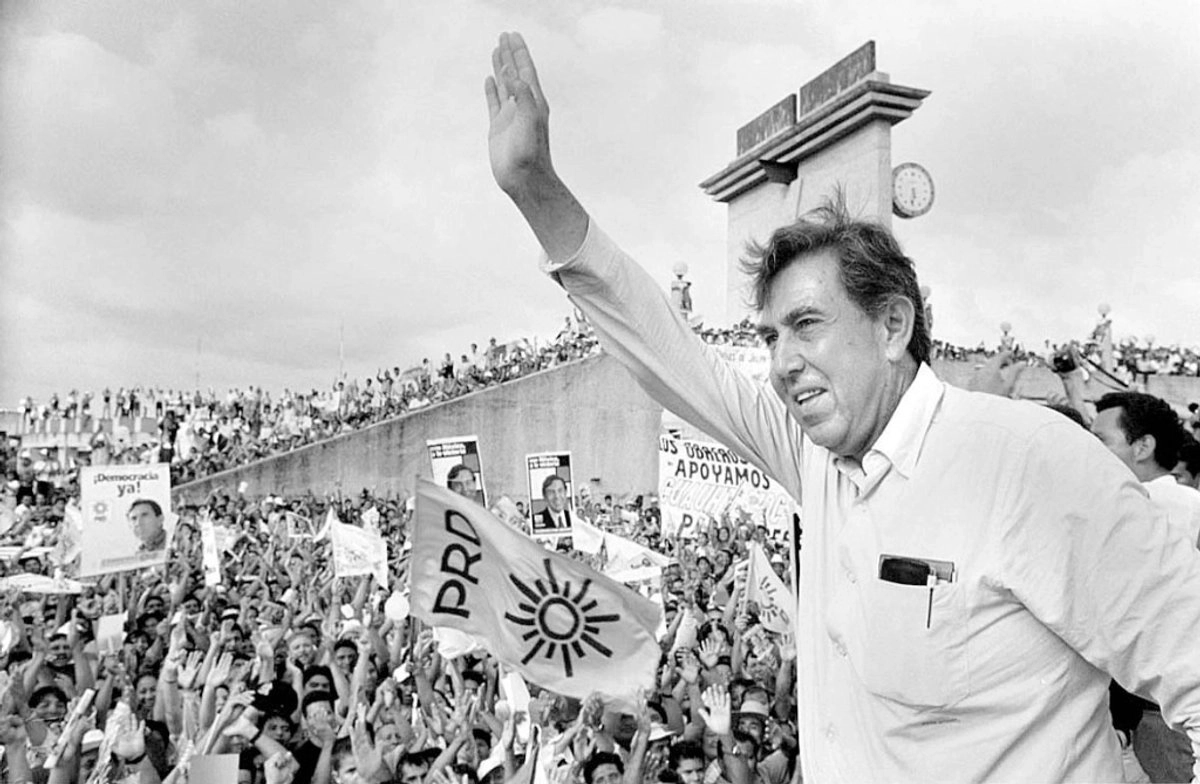
Se informa del fallecimiento del Ingeniero Cuauhtémoc Cárdenas a los 92 años, líder histórico de la izquierda mexicana.
Cuauhtémoc Cárdenas abandonó el PRI luego de considerar que el partido se había alejado de los principios que le dieron origen en la Revolución mexicana y que la imposición del Presidente de la República en el nombramiento de quien sería candidato presidencial no debía ser aceptada.
Durante más de un año buscó adeptos a la causa democrática y el 14 de octubre de 1987 el dirigente del Partido Auténtico de la Revolución Mexicana, Carlos Cantú Rosas, postuló a Cuauhtémoc Cárdenas como su candidato a la Presidencia de la República, después se sumaron el Partido Popular Socialista y el Partido del Frente Cardenista de Reconstrucción Nacional, y formaron el Frente Democrático Nacional (FDN), con otras agrupaciones pequeñas como el Partido Social Demócrata, el Partido Verde Mexicano y más tarde el Movimiento al Socialismo, que estaba integrado por desprendimientos del Partido Socialista Unificado de México, Partido Mexicano de los Trabajadores, Partido Revolucionario de los Trabajadores.
Fundador del PRD
Fue entonces que se lanzó como candidato presidencial del llamado Frente Democrático Nacional en 1988. Mientras que el PRI postuló a Carlos Salinas de Gortari. El 6 de julio día de las elecciones presidenciales, ante la famosa caída del sistema, Cárdenas, Manuel J. Clouthier (candidato del PAN) y Rosario Ibarra de Piedra (del PRT), hicieron a un lado sus diferencias y acudieron a protestar ante la Secretaría de Gobernación.
Las tendencias favorecían a Cárdenas quien se declaró vencedor con una tendencia de 42 por ciento, por 36 de Salinas y con 50 por ciento de casillas computadas. Entonces empezaron la protestas por el supuesto fraude electoral, los actos multitudinarios se repitieron, muchos estaban esperando el llamado de Cárdenas para defender el voto en las urnas, pero no ocurrió, pues según sus colaboradores pudo haberse desatado una guerra civil.
Después de la elección de 1988 optó por fundar un partido político para llevar adelante los objetivos de su campaña. Así nació el PRD en 1989. Volvió a ser candidato presidencial en 1994 y 2000, y en 1997 se convirtió en el primer jefe de Gobierno electo de la capital.

-
 Resto del mundo23 horas ago
Reanudan pláticas de paz entre Ucrania y Rusia con flexibilidad, afirman funcionarios de …
-
 Política17 horas ago
Mario Vázquez impulsa reformas para el agua y el campo en Chihuahua
-

 Revista23 horas ago
Debut de Felipe Tristán en Bellas Artes con óperas de Mascagni y Garro
-
 Resto del mundo21 horas ago
Hombre daña edificio gubernamental en China con excavadora